

Danish Fashion. The Designers And The It-Girls.
Denmark is a part of Scandinavia, so chances are, that you already have some ideas of how Danish fashion looks like, at least if you consider the term Scandinavian minimalism, that often is used about Scandinavian style and interior. But don’t anticipate anything about Danish fashion just yet, because the industry has a lot more than sharp lines and neutral colours to offer to its customers.
The Danish Fashion History
Danish fashion is based on a history that dates back to the late 1950s, when Copenhagen Fashion Week had its debut. The Danish people began to believe that fashion design didn’t have to come from big cities like New York, Paris and London, instead it could just as well be designed and manufactured right here, in Denmark.
Danish fashion has always been “Fashion for all”, there is an aesthetic agenda, but it is never too loud or exaggerated, the key words are applicable and quality.
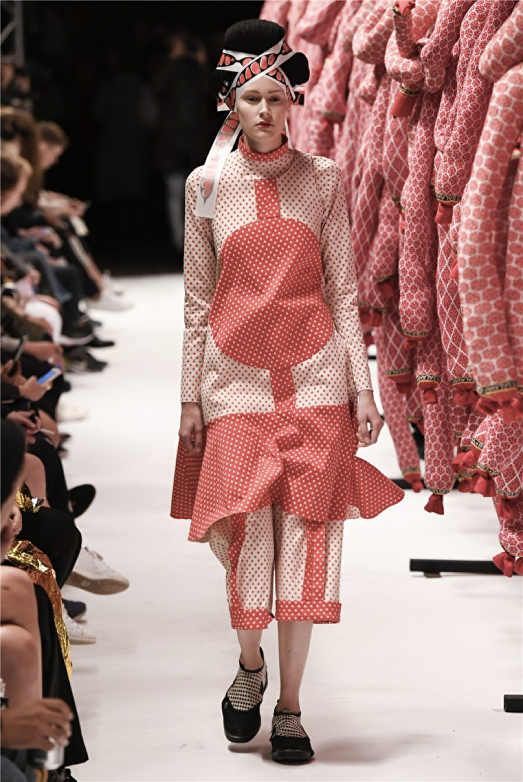
But besides being applicable, many Danish designers make sure to give their designs specific expressions and in 2013, designers such as Anne Sofie Madsen, Asger Juel Larsen and Freya Dalsjø change the agenda and create experiences that are challenging traditional silhouettes through their avant-garde collection and fashion shows.
Other designers tend to focus more on strong conceptual and graphic identity, which is the case with designers like Henrik Vibskov, Stine Goya and Soulland.
Diversity clearly seems to be the keyword for the future of Danish design, both when it comes to style and price.
A Growing Industry
Since the late 1950s, when the Danish fashion industry really began, a lot has happened. Today Danish fashion design is a rapidly growing business scene with new fashion designers blazing trails all over the globe. Danish fashion labels are starting to become more and more well known to the rest of the world, and with the ongoing development, it seems like the Danish fashion scene is here to stay. Helen Russel from The Guardian states that: “The Danish Fashion industry is booming and Copenhagen has been touted by insiders as a rising European fashion centre.”
Danish designs offer the classic minimalistic style you may already know about, but it also offers avant-garde and boundary pushing designs, beautiful structures, patterns, print and exiting silhouettes. Although the fashion palette consists of a wide variety of style, the Danes have their favourites. Sophie Warbuton writes for the Telegraph 4th of February 2015: “Approachability is core: cuts are modishly slouchy, which makes them easy to wear. Practical, a word often avoided in fashion circles, is another. Danish style is useful, convenient, pragmatic even. Danish fashion follows function.” There is a major focus on awareness and sustainability, and fashion in Denmark is a lot more about quality and quantity. Danes have small wardrobes because of the emphasis on owning a few beautifully manufactured items, that you can wear season after season. The style is timeless.
So, Who Should We Wear?
As mentioned above, Denmark has already established themselves in the international fashion world, but who are the Danish designers we should keep an eye on and where can we purchase their items?
If you mentioned the name Mads Nørgaard, to any Dane, you can be sure they will know who and what you are talking about. Mads Nørgaard is a very well-known Danish fashion designer and in 1986 he opened his first store. The philosophy behind the items is “make women sexier and men rougher – with a modernist gleam in the eye.” The collections often consist of basic t-shirts, edgy denim and cool dresses and the prices are reasonable. The key Mads Nørgaard item, is the famous striped long-sleeved t-shirt. It comes in many different colours and sizes for both grownups and kids.
Today Mads Nørgaard has more than 400 distributors around the world, so it shouldn’t be a problem to purchase this Danish designer from abroad.
Baum Und Pferdgarten is another Danish treasure. The brand was established in 1999 by Rikke Baumgarten and Helle Hestehave. The aim was to create humorous and dualistic playfulness in their collections, and ever since the establishment, strong colours and memorable prints have been the fundaments of the brand’s DNA.
Today Baum Und Pferdgarten is available in more than 20 different countries all over the world both online, in stores and in different shopping centres.
So, if you are not afraid to get noticed for your outfit and you love prints, colours and good quality, then Baum Und Pferdgarten could very well, be your next clothing adventure.
If you are more into luxury, clean cuts and decorative details, then By Malene Birger might have just what you’re looking for. By Malene Birger is run by Malene Birger herself. The company was founded in 2003 and is today a very well-recognised brand worldwide. By Malene Birger offers its customers affordable luxury with a classic cut and artistic details, all designed with love as the main inspiration. Every season, By Malene Birger reinterprets the classic designs, with either handmade details or new materials. It’s all about quality and elegant silhouettes, that are both functional and up to date with the trends of the fashion industry.
Today By Malene Birger is available in more than 40 different countries all over the world, both online and in stores.
Henrik Vibskov, on the other hand, is everything but classic cuts and elegant silhouettes.
Most commonly, Henrik Vibskov is not only associated with fashion, but also with a multitude of twisted yet tantalising universes that he creates in relation to each of his collections.
In 2001, Henrik Vibskov graduated from the prestigious Central St. Martins, and as a member of the Chambre Syndicale de la Mode Masculine, he is currently the only Scandinavian designer on the official show schedule for the men’s fashion week in Paris, something he has been since the beginning of 2003. Furthermore, Vibskov has received several prizes for his work including the Becks Student Future Prize in 2000, New Name of the Yaer in 2003, the Danish Design Council Award in 2007, Brand of the Year DANSKE Fashion Awards in 2008, an award from the Danish Arts Foundation in 2009, the Söderberg Prize in 2011, which by the way is the highest value design prize in the world, and in 2012, the Jury Prize at the Danish Fashion Award. Henrik Vibskov’s most previous recognition, was in 2016, when Her Majesty The Queen Of Denmark and the academy council from the Royal Academy of Fine Arts, gave him the Thorvald Bindesbøll Medal.
Henrik Vibskov’s designs, are available all over the world, and if an offbeat feel, experimental shapes, and inspiration from all over the world doesn’t scare you, then Henrik Vibskov’s designs might be for you.
Stine Goya is another brand/designer where individuality and colours are a great part of the DNA. Stine Goya graduated from Central St. Martins in 2005 and in 2006 she opened the design studio STINE GOYA.
The motivation behind Stine Goya, is an aim to encourage women to express what makes them unique. She works with colourful prints and feminine silhouettes, and even though a lot has happened since the studio opened, the DNA has remained the same.
Stine Goya has managed to breathe new life into the Scandinavian fashion scene, and she is continuing to create bold collections of both clothing and accessories with a playful and artistic approach. The typical Stine Goya universe, is characterised by beautiful pastels and dreamy femininity. It is simply impossible to step into a Stine Goya store, without being moved by the unique interior design, that exudes the same style and quality that the collections do.


In that way, the collections and the surroundings work in synergy to create a special universe in the Stine Goya spirit.
Above mentioned designers are just “to mention a few”. Over the years, as mentioned earlier, Denmark has definitely become a fashion destination to watch
