

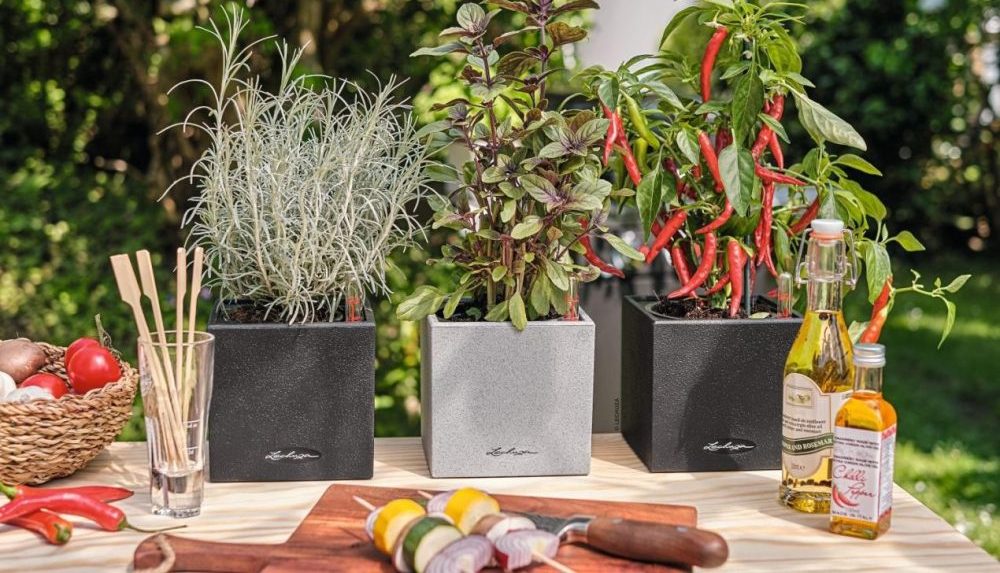
From pest-repelling herbs to flowers that protect your crops, the smartest small gardens are built around the right plant combinations.
If you don’t have a garden, it’s easy to assume growing your own plants is limited. But even a small balcony or patio can become a productive, low-maintenance green space.
The key is not how much you grow, but how you grow it.
Companion planting — pairing certain plants so they support each other — is one of the simplest ways to make a container garden more effective. Done well, it can reduce pests, improve plant health and make better use of a small space.
What is companion planting (and why it works in pots)
Companion planting is based on a simple idea: some plants grow better together.
Certain herbs and flowers release scents that repel pests. Others attract insects away from your crops. Some even improve the soil around them.
Plants sit closer together, which makes their effects more immediate. Strong scents are more concentrated, and positioning becomes more precise. Many common pests rely on scent to locate host plants, so disrupting that signal at close range can significantly reduce damage.
That means pest-repelling herbs can be placed exactly where they are needed, while trap plants can be used to intercept insects before they reach your main crops. In a compact space, even small adjustments in placement can change how effectively plants interact.
According to horticultural experts at Lechuza, this is one of the main advantages of container gardening. You can position plants exactly where they are needed, rather than relying on wider garden layouts.
Best companion plants for containers

Some plants are especially useful in small-space gardens.
Pelargoniums (scented geraniums) help repel flying pests like aphids and whiteflies. Place them near tomatoes or peppers to create a natural barrier.
Marigolds work below the surface as well as above it. Their roots can help protect neighbouring plants from soil pests, making them a strong all-round companion.
Nasturtiums act as a trap crop. They attract pests such as aphids, drawing them away from vegetables. Let them trail over the edge of a pot for maximum effect.
Basil is a classic pairing with tomatoes. Its strong scent helps deter insects, and it grows well in the same conditions.
Lavender can help mask the scent of nearby plants, making it harder for pests to find them. It also adds structure and colour.
Mint is effective at repelling insects, but should always be grown in its own container to stop it spreading.
Chives are another useful addition. They help deter aphids and work well alongside tomatoes and carrots.
Easy plant combinations to try
If you’re just starting out, a few simple pairings can make a big difference.

Tomatoes, basil and chives work well together because they share similar growing conditions, while the herbs help deter common pests that target tomato plants.
Peppers paired with pelargoniums benefit from a similar effect. The strong scent released by the geraniums helps to repel flying insects before they reach the crop.
Leafy vegetables such as cabbage or kale can be protected by nearby mint. Its intense aroma interferes with pests that rely on scent to locate their host plants.
For crops like courgettes or cucumbers, nasturtiums act differently. They attract pests away from the main plant, reducing damage by drawing insects to themselves instead.
Start with one or two of these combinations rather than trying to include everything at once. The goal is not variety for its own sake, but a balanced mix of plants that actively support each other.
How to arrange your pots for better results
Placement matters as much as plant choice.
Position pest-repelling plants as close as possible to the crops you want to protect. Their effect is local, so distance reduces how well they work.
Use trailing plants such as nasturtiums to create a buffer around the edges of containers. This helps draw pests away before they reach more vulnerable plants.
Height also plays a role. Taller plants like chives or lavender can sit behind or among lower crops, allowing their scent to disperse more effectively while maximising space.
Avoid overcrowding. Roots need enough room to develop properly, and stressed plants are more likely to attract pests. In many cases, using separate pots placed close together will give better results than forcing multiple plants into one container.
A small garden that looks after itself
One of the biggest advantages of companion planting is that it reduces the need for constant intervention.
Instead of treating pests after they appear, you are designing a system where they are less likely to become a problem in the first place. Strong scents help confuse insects, trap crops draw them away, and a mix of plants encourages beneficial species that help keep populations under control.
Over time, this creates a more stable growing environment. Plants experience less stress, soil health improves, and yields are often more consistent, even in a limited space.
In practical terms, that means fewer chemicals, less maintenance and better results from the same number of containers. A well-planned combination of plants does not just fill a balcony. It actively improves how the entire space functions.
Images: courtesy of Lechuza
