
Radical Greeks: National Theatre’s New Free Exhibition Dives Into the Politics of Ancient Drama

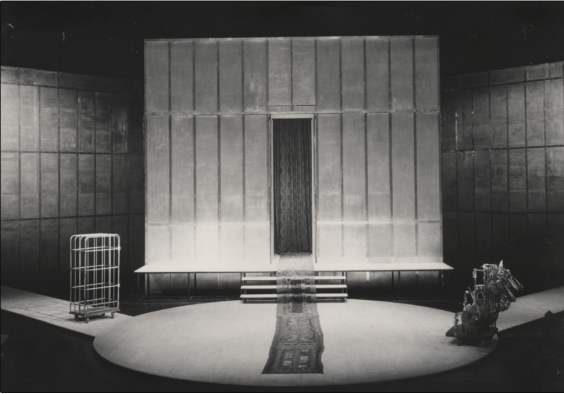
From Medea’s fury to modern protests, The Greeks: Radical Reinvention exposes why Greek tragedy still hits a nerve — and what theatre-makers do to keep it dangerous.
Somewhere between a riot and a ritual, Euripides’ Bacchae lands on the Olivier stage this September. It’s the first production from new National Theatre director Indhu Rubasingham — and it’s no quiet debut.
But long before Dionysus descends in rhythm and wrath, the Wolfson Gallery next door is already alive with ghosts. Not the polite, marble-headed kind. These are blood-stained rebels and exiled queens, disobedient daughters, gods in drag and entire choirs of the furious.
This is The Greeks: Radical Reinvention, a new free exhibition that invites audiences to go backstage — not just behind the curtain, but behind time itself.

Curated by Durham University’s Dr Lucy Jackson in collaboration with the National Theatre Archive, the show reanimates more than 40 years of Greek tragedy on the NT stage. And if you thought Greek drama was all sandals and solemnity, think again.
Because in these plays, the politics are never dead.
“The politics of music, the rights of refugees, the dirty deals that start and end wars…”
That’s how Jackson frames it. Not with nostalgia, but urgency. “We might not think that plays written over two and a half thousand years ago can ask really pointed questions about the way we live now. But they do,” she says.
The exhibition tracks four elemental forces — sound, space, movement and community — that fuel both ancient and contemporary Greek drama. Think Kae Tempest’s Paradise with an ensemble of women who had actually served prison sentences. Think Carrie Cracknell’s stripped-back Medea, where domestic tension simmers like a pressure cooker. Or the 2012 Antigone that turned Sophocles’ heroine into a whistleblower in a high-tech police state.
Visitors are drawn in not by timelines or plaques, but by costume sketches, model boxes, listening stations, rehearsal footage, and pulsing choruses that refuse to stay in the past. Even the architecture conspires: the Olivier Theatre’s design was inspired by Epidaurus, Greece’s ancient open-air theatre.
The result? A kind of aesthetic collision — past and present jostling for space.
“Radical” isn’t just in the title
When Rubasingham chose Bacchae as her first production as NT director, it wasn’t a safe pick. A play about a god of chaos who punishes an unbelieving king by unleashing the wild, it’s a text that resists taming. And in Nima Taleghani’s new version, it resists predictability too — driven by movement, rhythm and live music. “We want to provoke and seduce at the same time,” Taleghani has said.

The exhibition becomes a mirror to that ethos: what happens when you let an ancient story roar, without apologising for its violence or strangeness?
Soutra Gilmour’s costume designs for Antigone hang near footage of a chorus rehearsing staccato stomps and chants. You can listen to fragments of ancient verse next to recordings of post-punk-inspired scores. A 1981 Oresteia shares space with a digital timeline of protests against contemporary wars.
The Archive is more than just a memory
For the NT, the exhibition is also a showcase of its evolving archive — a living, accessible research space housed on The Cut. The Archive holds records from every production since 1963. But more than paperwork, it’s a creative engine, fuelling reinterpretation.
Jackson previously worked with the NT on its In Search of Greek Theatre video series, exploring how even small performance choices can unlock radically new meanings in classic texts.
The free exhibition runs until early 2026. It’s located between the Lasdun Restaurant and Olivier Stalls level, and also available via the Bloomberg Connects app, with voiceover, image zoom, audio transcripts and other accessibility features.
5 Must-See Moments in the Exhibition
- The Antigone model box: Gilmour’s stark concrete staging that reimagined Thebes as a surveillance state
- Rehearsal footage from Paradise: the unfiltered intensity of ex-prisoners performing as a Greek chorus
- Listening stations: featuring layered sound design from Medea, The Oresteia, and Bacchae
- Costume sketches: from militarised guards to grief-stricken mothers
- Interactive chorus experience: step inside the rhythm of the collective voice
The Archive also offers tours that allow visitors to get hands-on with history and receive an overview of what its collection holds. Tickets for these Archive Unboxed Tours are £10 per person, and free for select dates in September during the Lambeth Heritage Festival. More information about the National Theatre Archives offering on the National Theatre website.

Elena Leo is the Culture & Lifestyle Editor of Ikon London Magazine.


