
Chloé Zhao on Crafting Hamnet: Channeling Grief, Nature, and Creative Surrender

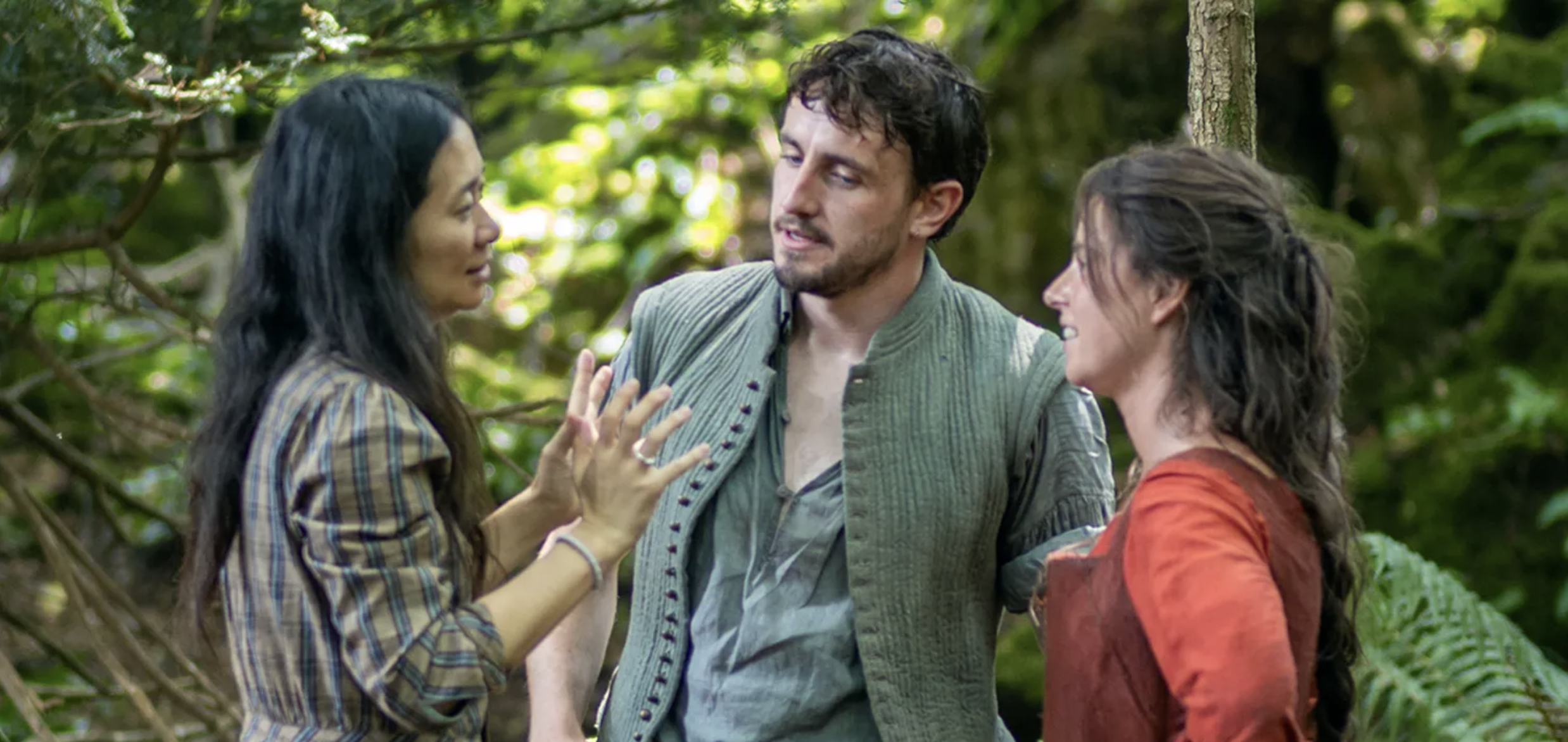
Chloé Zhao’s Hamnet has emerged as one of the most celebrated films of the awards season, earning eight Academy Award nominations, including Best Picture, Best Director for Zhao, Best Actress for Jessie Buckley, Best Adapted Screenplay (co-written by Zhao and Maggie O’Farrell), Best Original Score, Best Costume Design, Best Production Design, and Best Casting – at the 98th Oscars. The historical drama, released in late 2025, also claimed the Golden Globe for Best Motion Picture – Drama, along with Best Performance by a Female Actor in a Motion Picture – Drama for Buckley, and secured 11 BAFTA nominations, marking a record for a film directed by a woman. With additional wins at events like the AARP Movies for Grownups Awards (Best Picture) and praise for its emotional depth, Hamnet stands as a poignant triumph for Zhao, following her Oscar-winning Nomadland.
In a revealing Sundance Collab Spotlight conversation with moderator Erica Elson, Zhao opened up about her process behind the film, an adaptation of Maggie O’Farrell’s novel exploring the grief of William Shakespeare (Paul Mescal) and his wife Agnes (Buckley) after losing their son Hamnet, and how that loss may have inspired Hamlet. The discussion highlighted Zhao’s evolved filmmaking philosophy, rooted in her early Sundance-supported debut Songs My Brothers Taught Me.
Zhao’s deep fear of death and impermanence fueled the film’s exploration of grief. “Our fear of death and our fear of impermanence… is the driving force of everything we do in life,” she reflected. On set, this translated to embracing surrender: allowing ideas, visions, and even daily plans to “die” to avoid creative congestion. “Hamnet, more than ever of anything I’ve done, is so on the nose… about surrendering,” she noted, portraying Agnes as connected to nature’s cycles of death and renewal.
The production treated the set as an ecosystem and a “day ceremony,” with rituals to align energy, starting days with music, delaying shooting to set the mood, and fostering safety for vulnerability. Nature served as a literal “head of department,” earning the film a sustainability gold seal. Practical touches, like mandatory reusable water bottles and snacks to maintain blood sugar (Zhao’s favourite: watermelon), underscored bodily care amid intense work.
Central to Zhao’s direction was her intimate, intuitive work with the actors, creating a space where vulnerability could thrive. For the pivotal Globe Theatre scenes, she incorporated dreamwork led by coach Kim Gillingham, drawing from Carl Jung’s concept of active imagination to access the unconscious. “If you don’t make the unconscious conscious, then you will guide your life and your fate,” she paraphrased, explaining how actors like Buckley and Mescal brought their dreams to set each morning. These sessions treated scenes as symbolic dreams, unlocking deeper creative energy. Mescal, initially “scared of Dreamwork” and reluctant, eventually embraced it, even carrying the practice into his next project. Zhao stressed making such tools optional but selecting cast members open to exploration: “You can’t force anybody… but when they do get a taste of it, they never want to let go.”
This approach fostered a collective vibration, especially evident in the film’s climactic moments. Discussing a key clip featuring Buckley and Mescal’s isolated characters reuniting through grief, Zhao described the set as a “temple” where “there was no line between main actors, supporting actors, cast and crew.” Influenced by Max Richter’s “On the Nature of Daylight” and Dinah Washington’s “This Bitter Earth”—with lyrics pondering life’s bitterness redeemed by love – the group immersed in the music for hours, evoking the plague-survivors’ resilience in the story. “Everyone was sort of vibrating in the same frequency,” she said, enabling raw, present performances.
Working with young actors required particular sensitivity. For 11-year-old Jacoby Jupe, who plays Hamnet, Zhao conducted an extensive casting process inspired by the E.T. audition, testing his ability to remain present in unexpected situations. “That’s what you want from a child actor: pure presence,” she noted. Rather than discussing character arcs, she created immersive, real-feeling environments, ensuring the set felt “sacred” like a ceremony. As Emily Watson (who plays Shakespeare’s mother) observed, this gave “permission to perform” without embarrassment, allowing children to fully commit. Jacoby’s older brother, Noah Jupe, was cast midway through production to portray the actor playing Hamlet in the play-within-the-film, a decision that profoundly shaped the ending. Inspired by a photo of Noah in a dimly lit doorway, Zhao envisioned Hamlet’s loneliness and the audience’s communal strength, culminating in a hand-reaching gesture symbolising catharsis.
Zhao edited the first cut somatically, prioritising bodily feeling over intellect: “How does it feel in your own body when you watch a scene from this angle?” This intuitive approach ensured grief’s weight felt visceral yet cathartic.
Her advice resonates beyond filmmaking: embrace creative emptiness as fertile ground for rebirth, balance hierarchical structures with interdependence, and remember creativity as a universal birthright. Hamnet exemplifies Zhao’s empathetic vision – channelling personal fears into communal catharsis through art, grief, and renewal.

Editor in Chief of Ikon London Magazine, journalist, film producer and founder of The DAFTA Film Awards (The DAFTAs).
