
Henry Moore in the wild: monumental sculptures installed across Wakehurst landscape

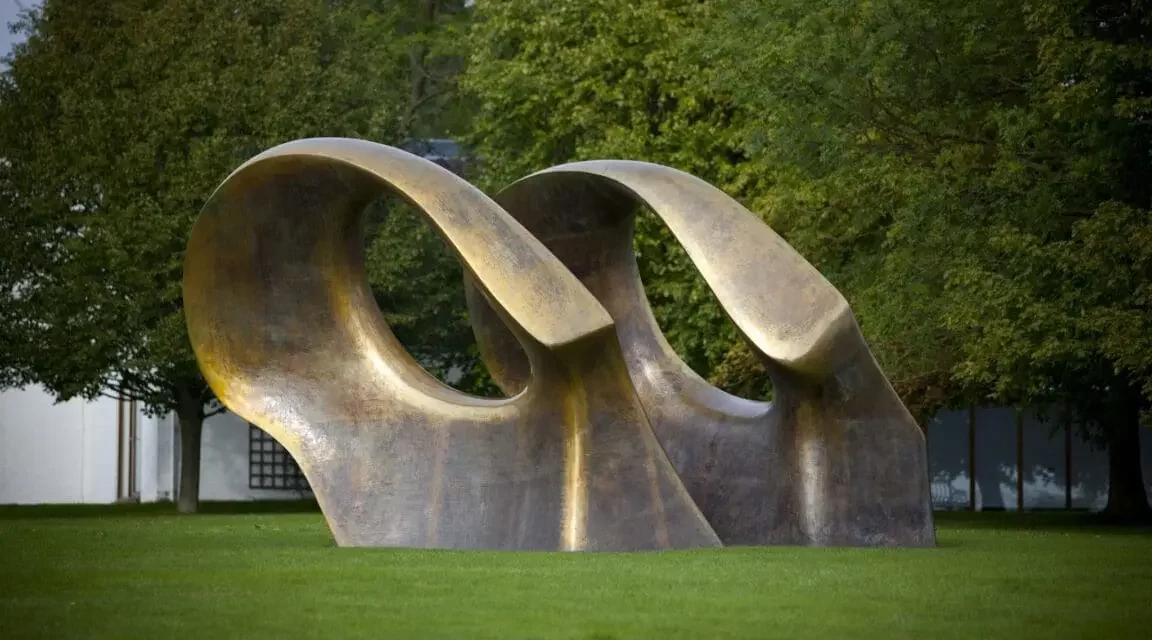
From June, Henry Moore’s monumental bronze sculptures appear across the landscape of Wakehurst in Sussex, set among woodland, sloping ground and open gardens. They are not placed in a gallery setting, but left in the open air, where weather, distance and terrain become part of the experience.
The installation forms part of Henry Moore and more, an outdoor exhibition running from 5 June 2026 to 23 May 2027, pairing four sculptures by Moore with newly commissioned works by Rana Begum, Rafael Pérez Evans and Paloma Varga Weisz.
The presentation sits alongside the larger Monumental Nature exhibition at Kew Gardens, where more than 30 works by Moore are installed across lawns, glasshouses and wooded areas in west London. Wakehurst offers a different encounter — less concentrated, more exposed — where sculptures sit within a working conservation landscape shaped by changing ground, planting and seasons.
Wakehurst itself is Kew’s wild botanic garden in the High Weald: a place of active research as much as display, home to the Millennium Seed Bank and long-term ecological projects. The sculptures are placed directly into this setting, where nothing is static and the landscape is constantly in motion.
Alongside Moore’s bronze figures, three contemporary commissions respond directly to the site rather than a fixed exhibition space.

Rana Begum works with materials taken from the garden itself, combining industrial fencing with fallen timber to build a zigzag structure that follows the natural slope of the land. The work sits somewhere between barrier and drawing — a line that shifts as the viewer moves through it.
Rafael Pérez Evans introduces a series of carved wooden forms positioned as resting points within the landscape. Each is shaped as a low horizontal platform, slightly tilted, designed for visitors to lie back and look upwards — a quiet continuation of Moore’s recurring interest in reclining figures, translated into something participatory and public.
Paloma Varga Weisz presents three bronze sculptures from her Wilde Leute series, shown in the UK for the first time. The figures draw on folkloric ideas of “wild people” living outside social structure — part myth, part human, part landscape — placed here among living planting and open ground.
Taken together, the works create a shifting encounter between permanence and change. Bronze and timber, object and terrain, fixed form and seasonal landscape sit in proximity rather than resolution.
Susan Raikes, Director of Wakehurst, said the exhibition connects Moore’s legacy with contemporary artists responding to the site’s conservation work and changing environment, including research linked to biodiversity and long-term ecological resilience.
Eva Owen, Programme Manager at Wakehurst, added: “We’re delighted to be bringing four of Moore’s sculptures to Wakehurst as part of Henry Moore and more. The opportunity to commission and display new contemporary pieces from pioneering artists in collaboration with the Henry Moore Institute also allows us a fantastic opportunity to connect Moore’s key motifs of care and connection with the leading lights of contemporary art practice. This in turn reflects the vital work which we do at Wakehurst, not only in terms of managing and researching an incredible array of landscapes and natural habitats, but also through the vital work of our Millennium Seed Bank, which stands as a potent symbol of caring for and conserving the natural world.”
Henry Moore and more runs at Wakehurst from 5 June 2026 to 23 May 2027 and is included with garden admission.
Tickets and visitor information: Wakehurst | Kew

Elena Leo is the Culture & Lifestyle Editor of Ikon London Magazine.