
Oscar-Nominated Death by Numbers: When Statistics Become Stories

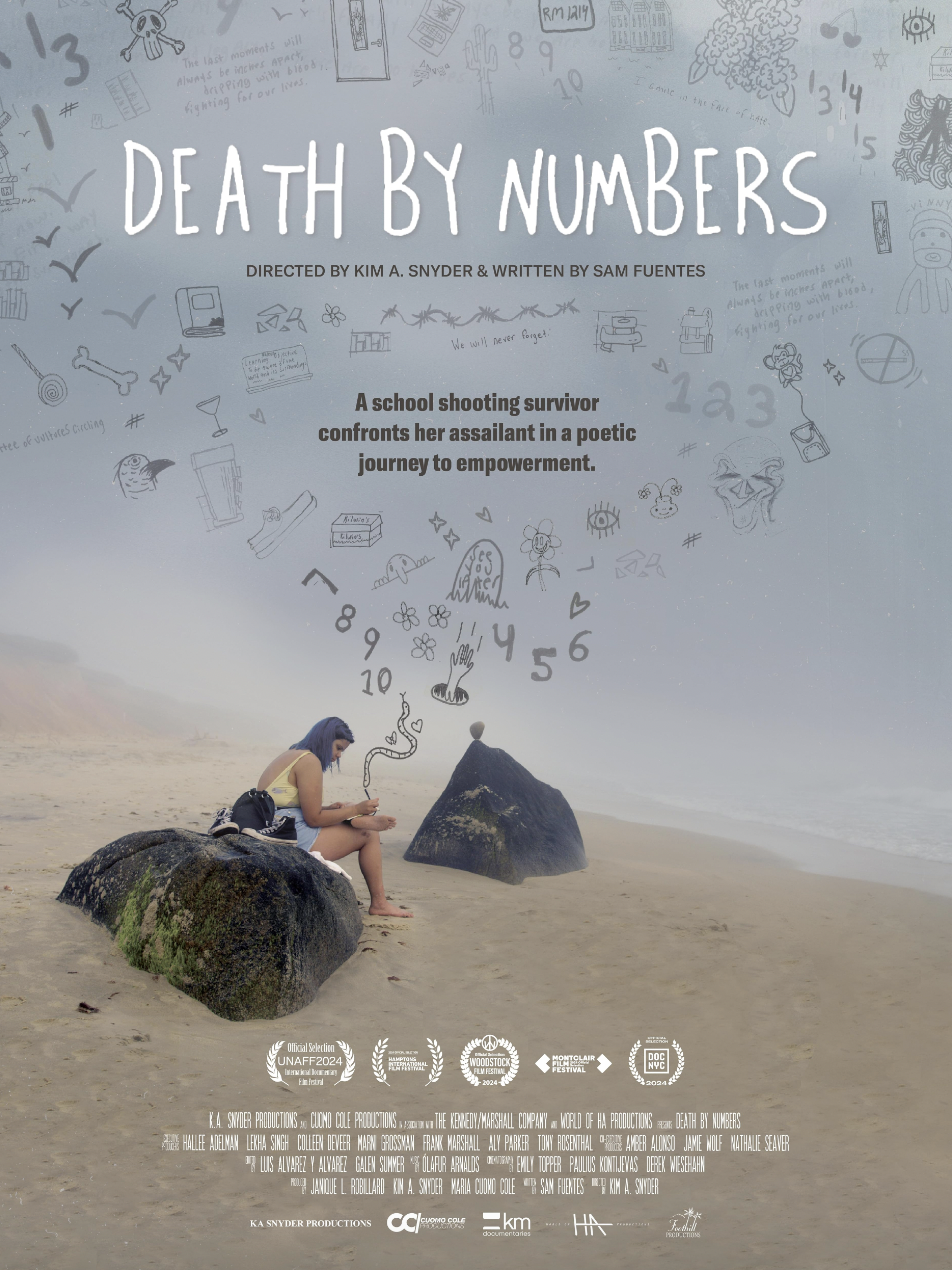
In a powerful screening at London’s Courthouse Hotel, the Oscar-nominated documentary short “Death by Numbers” brought a hushed audience face-to-face with the raw reality of gun violence survival. The film, co-created by director Kim A. Snyder and survivor-turned-writer Sam Fuentes, offers an intimate portrait of healing in the aftermath of one of America’s deadliest school shootings.
Like a kaleidoscope of human experience, the documentary weaves together multiple themes – trauma, healing, justice, and collective responsibility – allowing viewers to draw their own connections without didacticism. “Dead kids aren’t a political issue,” Fuentes stated during the post-screening discussion, her voice carrying the weight of personal experience. “It’s an issue of Human Rights, it’s an issue of living a life that you were entitled to and it’s just completely coming to a halt.”

The documentary, which took three and a half years to complete, follows Fuentes as she prepares to confront the person who shot her with an AR-15 at Marjory Douglas High School. The film’s strength lies in its poetic approach to trauma and healing, deliberately avoiding political rhetoric to focus on the human experience.
Director Kim Snyder made the conscious choice to limit the shooter’s visibility throughout the film. “I wanted the graphics covering his face to really feel like it has come from the pages of Sam’s journal, the stricken through cross,” Snyder explained, noting that the shooter’s face is only revealed when Fuentes directly confronts him – a powerful creative decision that returns agency to the survivor.
Fuentes described the challenging process of facing her attacker: “I knew I had to be restrained and I had to be dignified because he wanted fear, he wanted that reaction, he wanted me to be hysterical.” Despite her inner turmoil, she found strength in representing her community and standing against hatred.
The film’s impact extends beyond its immediate subject matter. “What I’m finding is that there’s a lot of sort of universal relatability as far as the sort of position that trauma and injustice of hate plays in our lives,” Fuentes reflected. She noted that viewers who have experienced various forms of trauma have connected with the film’s themes of rage, guilt, and healing.
Speaking to Ikon London Magazine after the screening, Fuentes revealed that this experience has ignited a deeper passion for writing. Her eloquent, thoughtful responses during the Q&A session demonstrated her natural gift for storytelling, and she expressed her desire to explore narratives beyond her personal experience.
“Death by Numbers” distinguishes itself by avoiding sensationalism and focusing instead on the long-term ripple effects of gun violence. As Fuentes pointed out, “After the news trucks leave a town that’s been shot up to pieces, kids still die after, community still suffers after, there the devastation ripples on for years and years later.”
The film serves as both a personal journey and a broader commentary on survival, resilience, and the human cost behind the statistics of gun violence in America. Through its intimate lens, it challenges viewers to see beyond the headlines and connect with the ongoing human impact of such tragedy.
The documentary, featuring handwritten journal entries and poetic narration, has garnered critical acclaim and is currently in consideration for an Academy Award. The London screening marks one of its first international presentations, bringing this distinctly American story to a global audience while raising universal questions about hatred, healing, and hope.
As Fuentes embarks on her journey as a writer, exploring new narratives and perspectives, we can only wish her the very best in her future creative endeavors. Her powerful voice, already evident in “Death by Numbers,” promises to bring more compelling stories to light.

Editor in Chief of Ikon London Magazine, journalist, film producer and founder of The DAFTA Film Awards (The DAFTAs).


