
Restoration of Rembrandt’s The Night Watch Begins: A Rare Opportunity for Public Engagement

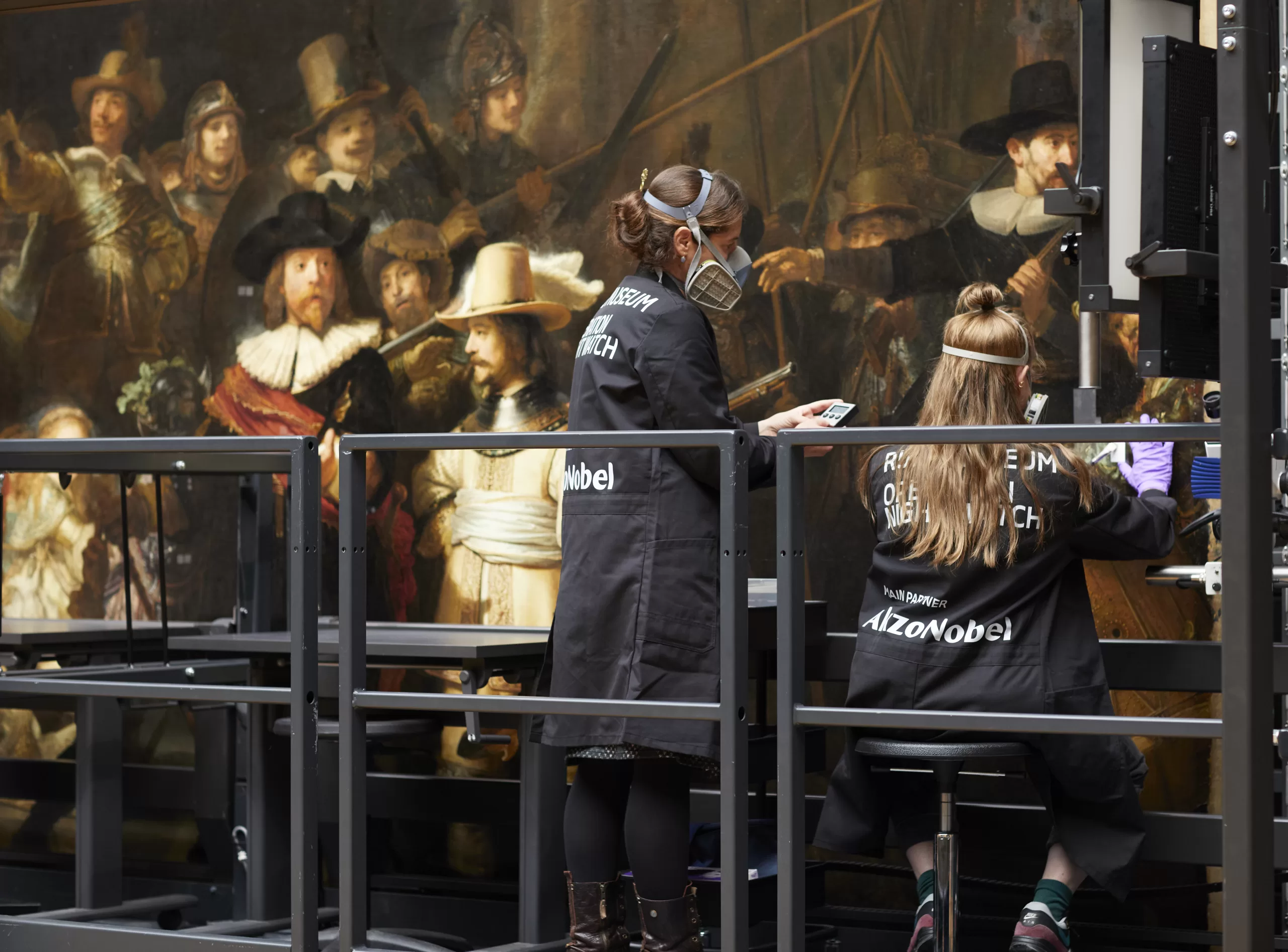
The Rijksmuseum has embarked on the second phase of its most ambitious restoration project yet: the conservation of Rembrandt’s iconic The Night Watch.
Following five years of cutting-edge research and scientific breakthroughs, a team of eight restorers has begun removing the varnish that has cloaked the masterpiece for decades. Visitors to the museum can witness this meticulous process live within the Night Watch Room, where the painting is housed in a glass-enclosed conservation studio.
Taco Dibbits, General Director of the Rijksmuseum, expressed the excitement surrounding the project: “The start of the restoration is thrilling. Removing the varnish will reveal The Night Watch’s eventful history. It will be a unique experience for the public to follow this process up close.”
A New Chapter in Operation Night Watch

Launched in 2019, Operation Night Watch represents the most extensive research and restoration initiative ever undertaken for Rembrandt’s 1642 masterpiece. The endeavour has leveraged groundbreaking technologies, including artificial intelligence, digital imaging, and material-technical research, to better understand the painting’s condition and the techniques used by the artist.
The removal of the varnish—a layer applied during a 1975–76 restoration—marks a pivotal step in ensuring the long-term preservation of the work. The process is conducted with near-microscopic precision: restorers use a special microfiber cloth soaked in solvent, gently dissolving the varnish layer before meticulously cleaning the surface with a cotton swab. Years of trials and tests on both The Night Watch and similar works have informed this painstaking approach.
Unveiling Rembrandt’s Masterpiece

This phase of the restoration promises to reveal new insights into the painting’s storied past. Originally commissioned for the Arquebusiers’ guild hall, The Night Watch broke new ground in group portraiture by depicting Amsterdam’s civic guards in action. Rembrandt used light and shadow to direct attention to key figures, including Captain Frans Banninck Cocq and the company’s young mascot.
The painting’s grandeur and complexity have made it a symbol of Dutch cultural heritage. At nearly four metres wide, it is Rembrandt’s largest canvas, renowned for its dramatic composition and intricate detail.
Operation Night Watch is a testament to interdisciplinary collaboration, with experts from the Rijksmuseum working alongside partners from institutions such as Delft University of Technology, the University of Amsterdam, and the National Gallery of Art in Washington, D.C. The project has also benefited from the support of sponsors including AkzoNobel, the Cultural Heritage Agency of the Netherlands, and private foundations.
For the public, the restoration is a rare chance to observe history in the making. The process is streamed live in the museum’s Night Watch Room, offering visitors an intimate view of one of the most significant undertakings in art conservation.
For further information on the restoration process and the exhibition, visit Operation Night Watch.

Elena Leo is the Culture & Lifestyle Editor of Ikon London Magazine.


