
The Brown Suite review: BlacBrik does all the dancing, but James Brown has the final word

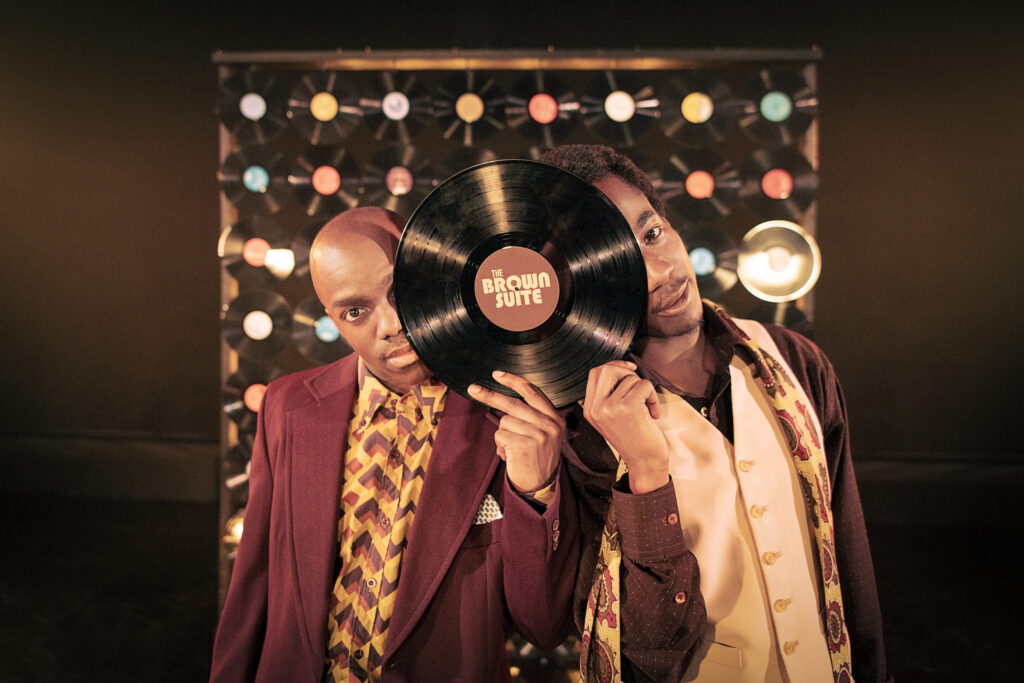
An uplifting homage to the soul, nightlife and energy of 1970s New York, danced to the timeless songs of James Brown, Sam Cooke and Etta James. Great for soul searching.
The year is 1956. James Brown releases Please, Please, Please, the record that turns a gospel-singing kid from South Carolina into a national star — and eventually helps earn him the title Godfather of Soul.
Nearly six decades later, in 2013, Nahum McLean and Darius Drooh meet at New York’s Ailey School and start creating together. In 2023 they form BlacBrik, their dance-theatre company, and create Death of the Bachelors, a short piece powered by the music of James Brown and Sam Cooke. After taking it to Ballet Nights, they decide the music has enough life in it for a whole show.
Fast-forward to autumn 2026 and The Brown Suite is touring the UK, bringing James Brown’s music, seven dancers and a 1970s New York story to theatres around the country, with its UK premiere at Richmond Theatre.
There isn’t a single spoken word in The Brown Suite, which is very much in keeping with McLean and Drooh’s idea of letting the music do the talking. And luckily, they have a very good cast of dancers to do the rest. We meet the characters as they make their way through 1970s New York before eventually ending up at the Brown Suite, a soul club where their friendships, flirtations and tensions begin to collide. From there, we follow them through a night of dancing, quarrelling, making up and falling in and out of love.

The story is told through dance, to a soundtrack of James Brown, Sam Cooke and Etta James. And while the dancing is impressive, it is hard to escape the feeling that the main character here is the music itself.
The show opens with a sort of character parade to I Got You (I Feel Good), each of them appearing on stage one by one on their way towards the club and getting a little chance to show what they can do. There is plenty of technical ability on display, but as an introduction to the characters it feels slightly detached: the stage is rather flat, there is little individual lighting to distinguish them, and we are being shown what the dancers can do before we really know who these people are. Fortunately, things click into place almost immediately afterwards. The dancing becomes more playful, the characters begin to interact, and the chemistry and rapport between them give the numbers a sense of purpose. It starts to feel more like a group of friends having a night out — which is when the party really begins.
That comes through particularly well in the later moment between Hugo Bragg’s Julian and Darius Drooh’s Ray. Their friendship comes across in the small things: the mutual showing off, the synchronised moves, the general business of two men doing men’s things. The duet could have done with a tighter follow spot to isolate them from the otherwise fairly bare stage, but Bragg’s slightly chaotic energy and Drooh’s natural physicality make the relationship immediately engaging.
There is plenty of sensuality in the show too. Etta James’s I Just Want to Make Love to You gives Leila Wright and Lukas Hunt a chance to slow things down, with the two dancers playing attraction through close contact, lifts and teasing near-misses. Hunt brings a physical, grounded quality to the duet, while Wright’s long lines give it a softer edge. It is sexy, and here the choreography succeeds in telling us something about the characters without needing a word.
It is also where Wright looks most at home, while the looser, funkier material does not always come as naturally, especially through the shoulders and hips. In the larger group numbers, that difference can pull the eye towards her when the choreography wants us to be watching the ensemble. Here, with just the two of them, there is room for her particular quality of movement to shine.

It’s a Man’s Man’s Man’s World becomes part of the more complicated relationship between Ray and Angela, played by Drooh and Monique Jonas. A gesture as ordinary as helping someone into a coat becomes part of the choreography, and suddenly the little domestic irritations between a couple are being played out in movement. It is not the biggest dance number of the evening, but it is one of the more expressive ones.
One of the evening’s highlights is Monique Jonas’s At Last solo — after all the funk and swagger, she gets something softer and more exposed. Her movement is fluid, expansive and almost dreamlike, while still being emotionally charged.
The choreography has a difficult job in The Brown Suite. McLean and Drooh are working across ballet, contemporary, jazz, hip-hop and funk, and it can be no small task to build movement around music this heavily syncopated. When it works, the different styles stop feeling like separate ingredients and become part of the same groove.

The stage itself is fairly sparse, which puts even more responsibility on the dancers to fill the space. Joshie Harriette’s lighting does a lot of the work: vertical neon tubes change colour and rhythm, beams cut across the stage, and at times the light swirls and glows like a lava lamp, which feels entirely right for the 1970s setting. In the club scenes, the whole place starts to feel like a smoky New York nightclub. It is one of the smartest things in the production.
Maybelle Laye’s costumes put us firmly in the seventies without turning the dancers into walking fancy-dress versions of the decade. There are flares, bold colours, flowing fabrics and plenty of sparkle, but everything still looks made for dancing rather than posing. Against Harriette’s relatively muted set and neon lighting, the costumes bring colour and movement to the stage without making it feel over-dressed.

With a storyline that can at times be unclear, Joshi Martina’s part as DJ Mr New York is an interesting piece of dramaturgy. He is more than a mere man behind the decks: he is the conductor of the whole performance, the spirit of the time, and less a single character than New York itself, presiding over its nightlife from behind the DJ booth.
God is a DJ, Faithless told us; here, so is New York. Even his sweeping of the floor becomes a little bit of choreography before, near the end, he finally steps into the spotlight and unleashes a few explosive jumps and some very serious hip action. The DJ booth itself is cleverly brought in and out, and the sound design gives some of those club moments a properly ridiculous bass — the sort you feel in your chest.
By the end, after all the flirting, quarrelling and general emotional untangling, everyone is back together, the DJ turns up the funk and metallic confetti rains down on the dancers, turning the stage into a full-on party.
Where The Brown Suite lacks a storyline, it makes up for it in atmosphere. It is a celebration of music, movement, friendship and simply being alive in a room with other people. Is a playlist of soul classics enough to justify a full-length dance show? I’m not entirely sure.
But I am quite happy to live in a world where it can go on tour and give every city it visits a 90-minute jolt of James Brown-powered positivity.
The Brown Suite
Richmond Theatre
The Green
Richmond
TW9 1QJ
30 September–3 October 2026
Tickets: ATG and Brown Suite
Tour dates
Richmond Theatre — 30 September–3 October
Wolverhampton Grand Theatre — 5–7 October
Princess Theatre, Torquay — 14 October
Woking New Theatre — 16–17 October
Manchester Opera House — 23 October
Regent’s Theatre, Stoke-on-Trent — 24 October
Aylesbury Waterside — 1 November
Theatre Royal Brighton — 3–4 November
The Alhambra Theatre, Bradford — 6–7 November
Darlington Hippodrome — 10 November
Fareham Live — 16 November
York Grand Opera House — 19–20 November

Elena Leo is the Culture & Lifestyle Editor of Ikon London Magazine.


