
Berlinale: ‘Kontinental ’25’ – When Conscience Meets Capitalism in Modern Romania

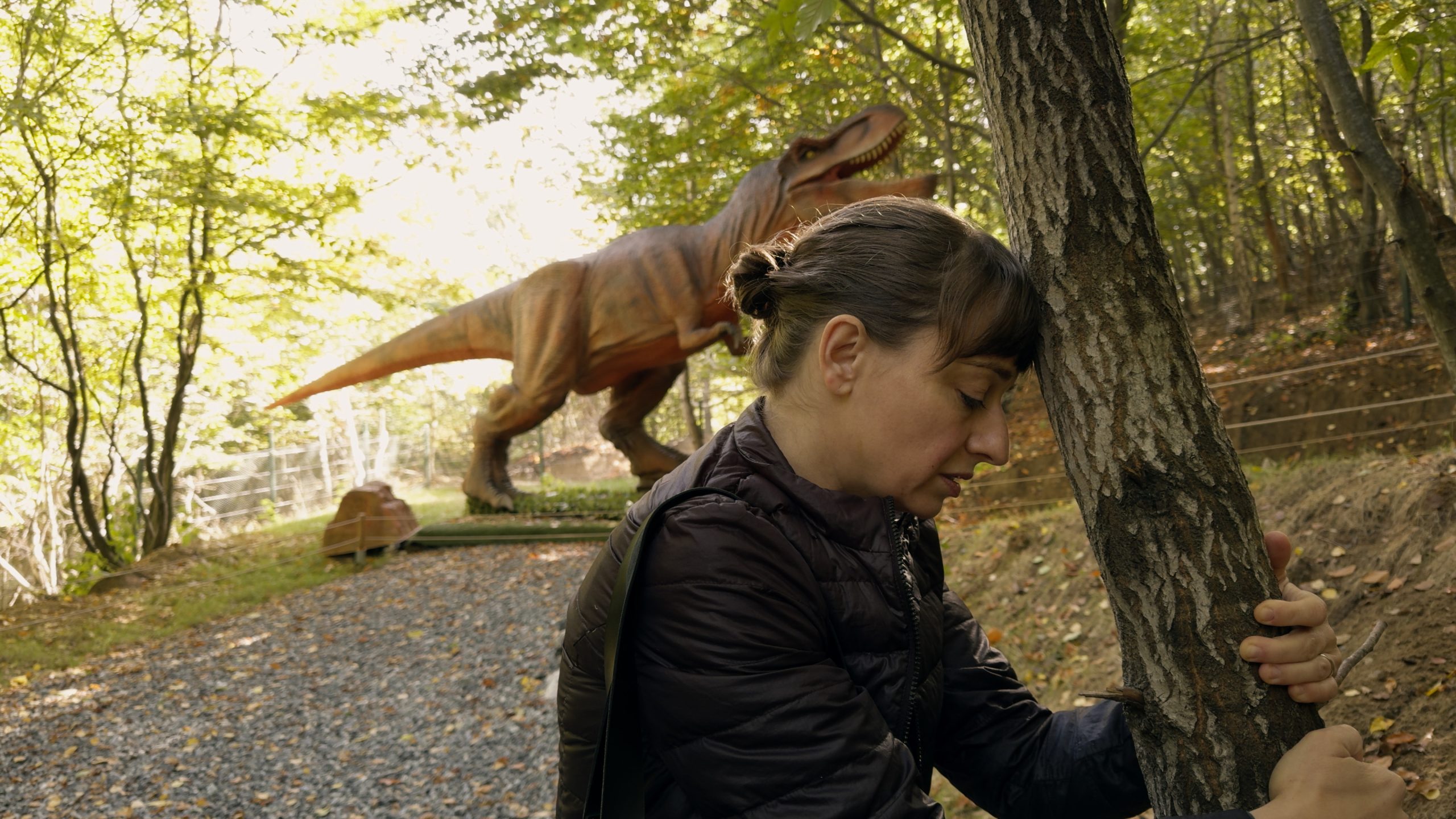
Romanian director Radu Jude’s latest offering at the 75th Berlinale, “Kontinental ’25,” emerges as a powerful examination of the moral crisis in contemporary Romania, earning the festival’s Best Writing Award. Shot on iPhone in just 11 days, this 109-minute drama-comedy proves that compelling storytelling can triumph over technical limitations.

A Tale of Moral Aftermath
Set in Cluj, Transylvania’s burgeoning tech hub, the film follows Orsolya, a bailiff portrayed with nuanced complexity by Eszter Tompa. When a routine eviction leads to an unexpected tragedy – a homeless man’s suicide – Orsolya finds herself navigating the murky waters of personal responsibility within a system she’s duty-bound to serve.
Jude’s screenplay, drawing inspiration from a years-old news story, masterfully weaves together influences from cinema classics. The director acknowledges Roberto Rossellini’s “Europe ’51” as a spiritual predecessor, though he transforms its metaphysical tragedy into a contemporary tragicomedy. The film’s structure notably borrows from Hitchcock’s “Psycho,” beginning with the victim before shifting focus to the person inadvertently responsible for their fate.

Beyond Technical Constraints
Shot entirely on iPhone with minimal equipment, the film occasionally struggles with technical limitations – hunting for focus in close-ups and basic lighting design. However, these constraints seem to enhance rather than detract from the film’s authentic portrayal of modern Romanian society. The choice of equipment aligns with Jude’s stated intention to embrace Rossellini’s concept of “poverty of means,” creating an artistic harmony between form and content.
Cluj: A City of Contradictions
The setting itself becomes a character in the narrative. Cluj, celebrated as Romania’s “smart city” success story, serves as a perfect backdrop for exploring the contradictions of post-communist capitalism. The film contrasts the city’s booming IT industry and rapid development with its social casualties, including chaotic urban sprawl and displaced communities. Striking shots of dinosaur statues at a tourist attraction serve as an unexpectedly poignant metaphor for commercialization and possible post-human futures.

The Comedy of Conscience
Jude’s treatment of guilt and moral responsibility avoids heavy-handed messaging in favor of exploring human contradictions. Orsolya’s attempts at redemption – reading left-wing intellectuals and making NGO donations – mirror contemporary society’s often inadequate responses to systemic problems. The director draws parallels to modern social media activism, where posts about global crises sit alongside casual personal updates, creating what he calls a “Balzacian human comedy.”
Historical Context and Contemporary Relevance
The film’s examination of individual moral responsibility is grounded in Romania’s specific historical context. The country’s transition from Ceaușescu’s dictatorship to aggressive neoliberalism, bypassing the social democratic phase seen in other European nations, adds depth to Orsolya’s predicament. Her experience as a member of Romania’s Hungarian minority adds another layer to the exploration of Transylvanian history and contemporary nationalism.
Technical Innovation in Simplicity
Shot back-to-back with another project (a Dracula adaptation), “Kontinental ’25” demonstrates how resource constraints can spark creativity. The film’s ending, which dissolves the narrative into documentary-style shots of buildings, represents what Jude calls a “return to early cinema’s potential.” This blending of fiction and documentary elements grounds the story in reality while pushing the boundaries of conventional storytelling.

Award-Winning Impact
The film’s Best Writing Award at Berlinale 2025 validates Jude’s approach to storytelling. Despite (or perhaps because of) its technical simplicity, “Kontinental ’25” delivers a powerful meditation on individual responsibility in an age of systemic inequality. It proves that compelling narratives and sharp social commentary can overcome technical limitations, establishing itself as a significant addition to contemporary Romanian cinema.
The film stands as a testament to the continuing vitality of Romanian cinema, demonstrating that the spirit of innovation that characterized the Romanian New Wave continues to evolve and find new forms of expression. Through its exploration of guilt, responsibility, and the complexities of modern life, “Kontinental ’25” offers a unique perspective on how individuals navigate moral crises in an increasingly unequal world.

Editor in Chief of Ikon London Magazine, journalist, film producer and founder of The DAFTA Film Awards (The DAFTAs).


